
Japan Golf Dress Code & Etiquette: What Visitors Actually Need to Know
Nobody expects you to be perfect — but a few unwritten rules make the difference between being a welcome guest and a story the staff tell later. Here's the short course.
Updated July 2026
The short answer
Wear a collared shirt, no jeans, and golf shoes; some clubs also ban ankle socks and require jackets in the clubhouse in cooler months. Expect a sit-down lunch break between nines, keep pace, and keep tattoos covered in clubhouses — baths often bar them entirely.
Japanese golf etiquette looks intimidating from the outside. In practice, it comes down to a handful of habits — and courses are genuinely delighted to host visitors who make the effort. Here’s everything that matters, in the order your day will happen.
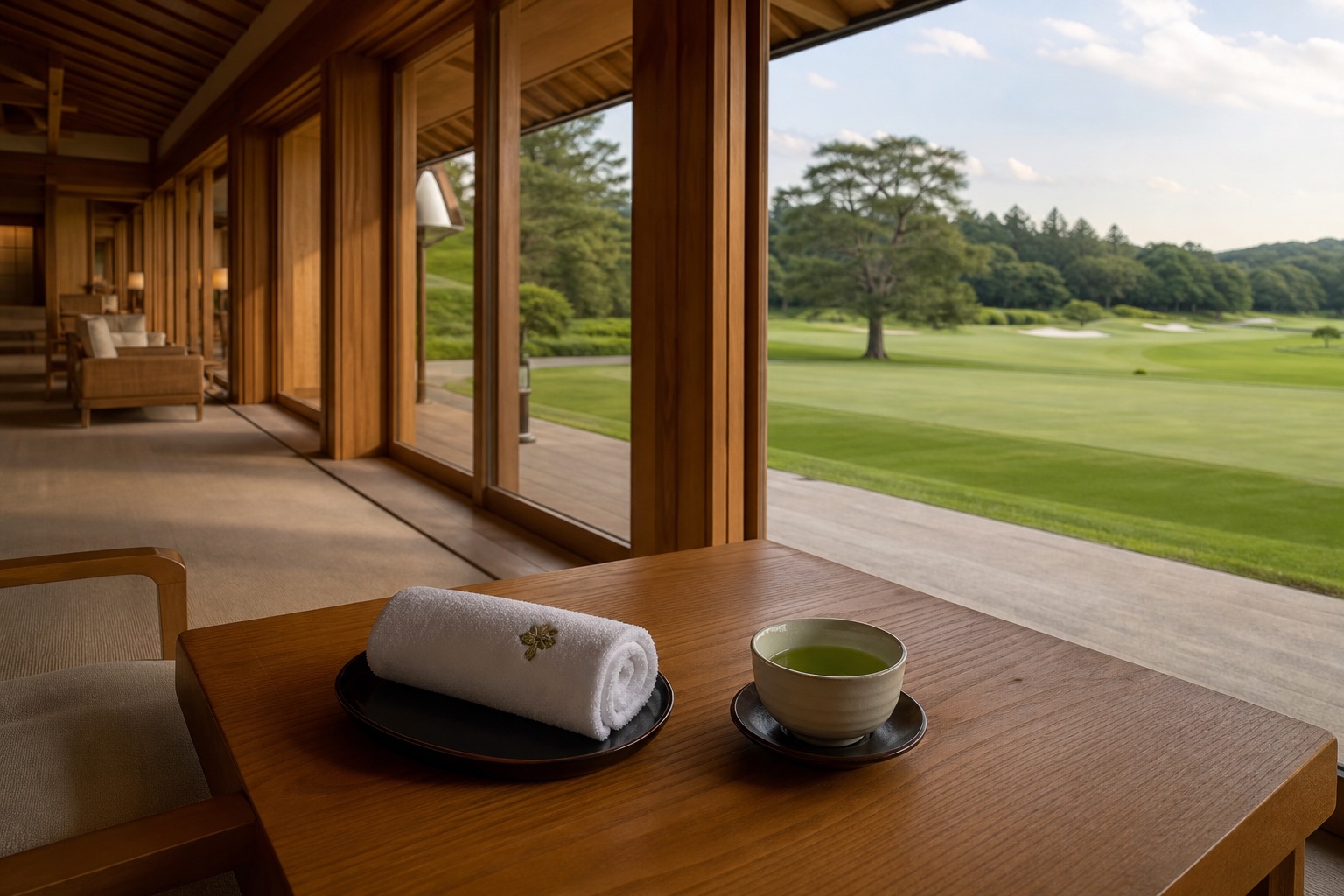
Before you leave the hotel: dress the part
On the course: collared shirt tucked in, tailored trousers or shorts, golf shoes. Nothing revolutionary. The things that get flagged: untucked shirts, denim (never, anywhere), cargo shorts, and t-shirts.
Traveling to the club: this is the uniquely Japanese part. At traditional clubs, members arrive in a blazer or jacket, change into golf wear in the locker room, and change back before leaving. As a visitor you get latitude — but at prestige venues like Chiba Birdie Club or Narashino, smart-casual arrival wear (collared shirt, no shorts or sneakers) with a jacket in cooler months reads as respect and will change how you’re treated. Resort courses in Hokkaido or the Fuji lakes are far more relaxed.
When we confirm a booking, we tell you the actual expectation for that specific course — no guesswork.
Arrival: the 60-minute rule
Arrive at least 45–60 minutes before your tee time. Japanese golf days run on precision:
- Front desk check-in. Give your name (your booking will be under the reservation name — ours if we booked for you, with your name attached). You’ll receive a locker key with a number — this number becomes your identity for the day. Drinks, lunch, pro-shop purchases all get charged to it.
- Bag handling. Staff take your clubs from the taxi/car and load them onto your cart. You will not touch your bag again until the round ends. Resist the urge to help; it confuses everyone.
- Locker room, then to the tee. Changing shoes happens in the locker room, not the parking lot — a small thing locals notice.
On the course: pace and rhythm
- Keep pace. Japanese courses run full tee sheets with military timing. The group behind you will never say anything; the course marshal might. A 9-hole half should take about 2 hours 15 minutes.
- Carts stay on the path at most courses (many are remote-controlled or self-driving on rails — enjoy it, it’s delightfully Japanese).
- Rake bunkers, repair pitch marks — standards are high and visible.
- The tea house (茶店). Small rest huts appear mid-nine, some staffed, some with vending machines. Charge drinks to your locker number.
The lunch break: yes, it’s mandatory (usually)
At most Japanese courses, you play nine, then take a 45–60 minute sit-down lunch before the back nine. Your restart time is printed on your cart slip or told to you at the turn — don’t be late for it.
Fight the instinct to see this as an interruption. Order the katsu curry or the soba set, have a beer if you like (very normal), and enjoy what is genuinely one of Japanese golf’s great pleasures. Some courses offer “through play” (スルー) plans without the break — if you strongly prefer that, tell us and we’ll book accordingly.
After the round: the bath
Nearly every Japanese course has a proper communal bath — sometimes a true onsen. The ritual: finish your round, hand your shoes to be cleaned (many clubs do this automatically), bathe, change into your travel clothes, then settle up.
Bath rules in one line each:
- Wash and rinse thoroughly at the seated showers before entering the tub.
- No swimwear — bathing is nude, separated by gender. Bring nothing but the small towel provided.
- The small towel stays out of the bathwater (fold it on your head like the locals).
- Tattoos: policies vary — see our dedicated tattoo guide.
Skipping the bath is allowed. But you’d be missing the best 30 minutes of recovery in golf.
Checkout and payment
Return your locker key at the front desk; everything you charged appears on one bill. Credit cards are accepted at nearly all courses. And once more for the record: no tipping — not the caddie, not the bag staff, not the front desk. Gratitude in Japan is verbal.
The one-paragraph version
Dress properly (no denim, tuck in your shirt, jacket at fancy clubs), arrive an hour early, let staff handle your bag, keep pace, embrace the lunch break, shower before the tub, pay with your locker key, don’t tip. Do those things and you’ll be the visiting group every Japanese club hopes to host.
Every booking we confirm comes with a written English day-of-play sheet covering all of the above for your specific course. Request your tee time here.
Quick answers
Do I really need a jacket to enter the clubhouse?+
At traditional and prestige clubs, arriving and departing in a jacket is customary for men, especially in cooler months. Resort-style and modern courses are relaxed about it. We tell you the expectation for your specific course when we confirm your booking.
Can I wear shorts?+
At most courses yes, typically expected with knee-high or ankle socks depending on the club's rules. Denim is never acceptable anywhere.
Should I tip my caddie in Japan?+
No. Tipping is not part of Japanese golf culture — for caddies, staff or anyone else. A warm thank-you (arigatō gozaimasu) is the appreciated currency.